
Healing from brain injury: Family honors caregivers
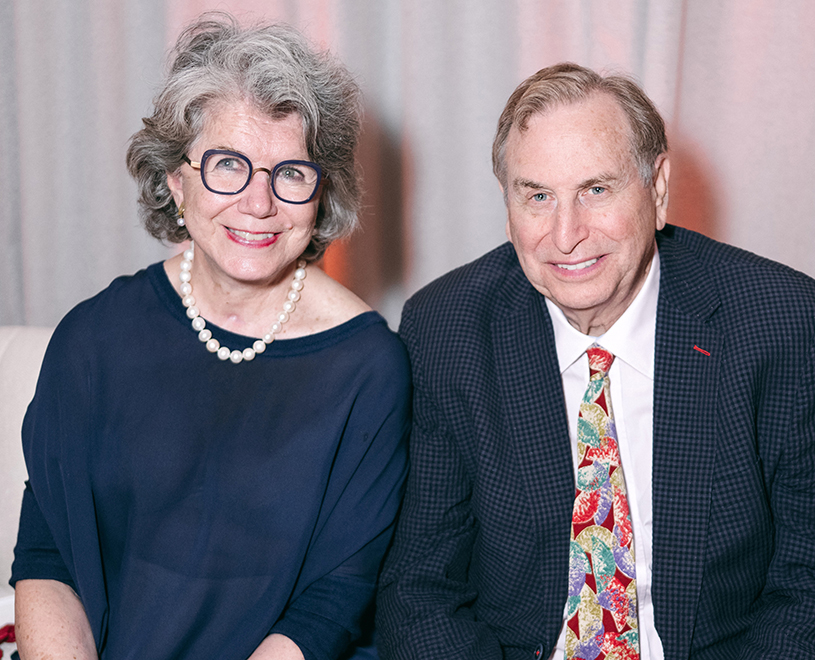
On June 28, 2024, soon after her 70th birthday, Cynthia Strauss’s life changed in an instant. She fell down her basement stairs while carrying a basket of laundry, and her son found her unconscious with a severe head injury. Cynthia’s husband, Harry Sherr, dialed 911, and an ambulance rushed her to the emergency department at Brigham and Women’s Hospital.
“The responsiveness of the emergency room was extraordinary,” Cynthia says. “Apparently, I was hit on both sides of my brain in the fall, and the surgeons acted quickly.”
Michael Mooney, MD, an attending neurosurgeon in Mass General Brigham’s Department of Neurosurgery who performed Cynthia’s surgery, says, “Cynthia is an example of a truly remarkable recovery. She suffered a serious neurological injury requiring emergency surgery to remove part of her skull and relieve pressure on the brain.”
Neurosurgery saved Cynthia’s life, and there was still a long road ahead. After nearly a month in a medically induced coma in the Neuroscience Intensive Care Unit, Cynthia was transferred to Spaulding Hospital for Continuing Medical Care Cambridge, where she spent two and a half months rebuilding her health and relearning how to walk and talk.
Cynthia and Harry credit her positive outcome to the more than 100 caregivers who helped her from both Mass General Brigham hospitals. As the two-year anniversary of her injury neared, they decided to make a $200,000 gift in gratitude for her care.
“The coordination between the Brigham and Spaulding and their expertise in neurologic care guided me through this shocking journey,” says Cynthia. “This takes care and skill from leadership as well as staff.”
A holistic approach
Recalling the harrowing experience, Harry says, “In the neuro ICU, Cynthia was connected to several monitors and had a breathing tube and a feeding tube.” Amidst the difficult days were some bright spots that helped the family through. He says, “Friends came to visit; they held her hand and sang to her. The nurses were fantastic and put up with my repeated jokes.”
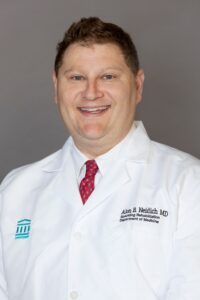
After Cynthia emerged from the coma and continued her medical recovery at Spaulding, therapists began guiding her through neurological rehabilitation. Alon Neidich, MD, an internal medicine physician who coordinated her care, says, “We discussed with Cynthia what to expect with her memory, focus, and regaining strength and movement. She was like a sponge — she accepted every level of insight we could provide.”
For Cynthia, the opportunities to interact with a chaplain and receive frequent visits from friends and family also provided essential support. “One of the reasons I kept going is the doctors and nurses and rehab therapists knew how to work together and treat me as a whole person — it was critical for my recovery,” says Cynthia. “They said, ‘We have to make sure your body is healing so we can support the healing of your brain.’”
Meanwhile, Harry had been receiving daily texts and calls from concerned friends and family nationwide inquiring about Cynthia’s health. He asked Dr. Neidich to give a five-minute update on a video call, with Cynthia’s approval. Nearly 100 people tuned in, and for 30 minutes, Dr. Neidich shared her progress and answered questions. When Harry asked the doctor to give a second update, he gladly obliged.
As Cynthia improved, the Spaulding team coordinated with the Brigham for a second neurosurgery to replace the missing portion of her skull.
One of the reasons I kept going is the doctors and nurses and rehab therapists knew how to work together and treat me as a whole person — it was critical for my recovery.
Giving back
On the 99th day after her emergency admission, Cynthia went home. She completed in-home therapy in six weeks, half of the time anticipated.
To show thanks, Cynthia brought her homemade cookies to the Spaulding care providers. “It was an extraordinary moment,” Dr. Neidich says. “The team was so grateful to see her improvement.”
A retired banking and investment professional, Cynthia has fully resumed her life — traveling, serving on community boards, and even making a cross-country move with her family.
Harry says, “We have been blessed and want to return some of that kindness by giving to both hospitals.”
The couple is dedicating half their gift to the Mass General Brigham Neuroscience Institute Fund and half to the Strauss-Sherr Fund at Spaulding Rehabilitation.
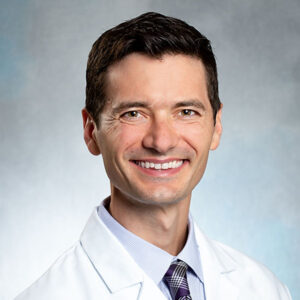
“Our understanding of brain injury after severe trauma remains an enormous work in progress,” says Dr. Mooney. “Cynthia and Harry’s generous support will help ensure this work continues through the Neuroscience Institute.”
At Spaulding, Dr. Neidich says, “Cynthia and Harry want to empower us to help every patient as we helped them. We are grateful and take this solemnly to keep improving care for patients who are neurologically recovering.”
Reflecting on the experience, Cynthia wants to encourage the care teams and their leaders. “They provided incredible support for my healing,” Cynthia says. “Thanks to them, I never lost hope. Now, we want to give the leaders resources to pursue new ideas that will help more patients and families.”
To learn more about supporting the Mass General Brigham Neuroscience Institute or Spaulding Rehabilitation, contact jdutter@mgb.org or 617-851-9330.