
Navigating Infertility: The Role of Mental Health Support

As she navigated her treatment for infertility, Carolyn Ferguson felt frustrated and overwhelmed: frustrated that she’d been unable to conceive on her own, and overwhelmed by the information and data coming at her. At the same time, she was educating her husband about the process, fielding questions from loved ones about their plans to start a family, and watching her friends grow their own families.
Looking for a way to cope, Ferguson—a patient at Brigham and Women’s Hospital Center for Infertility and Reproductive Surgery—asked to meet with a social worker who specializes in infertility and was connected with Anne Geoghegan, LICSW. That helped a great deal, and when the possibility of taking medicine was discussed, she was referred to Florina Haimovici, MD, who founded and continues to oversee the Brigham’s Reproductive Endocrinology and Infertility Psychiatry Clinic and is director of education in medical psychiatry at Brigham and Women’s Faulkner Hospital.
At her first appointment with Haimovici, Ferguson recalls seeing photographs of embryos hanging on the office walls.
“I remember thinking, ‘I’m in the right place. She gets it.’ It felt like a hug—that feeling of being supported,” she recalls. “The combination of talking to the social worker and Dr. Haimovici was so helpful, to have somebody who understands what you’re going through.”
She soon began taking medication to deal with her anxiety. “It was so helpful at the time to be able to bring down my stress levels. It enabled me to really hear the options, absorb them, and make educated decisions,” she says.
Ferguson’s fertility journey has a happy ending—she is now a mother to two boys, ages 3 and 5 ½—thanks, she says, in no small part to the mental health support she received to manage her anxiety and stress while trying to get pregnant.
Her experience is also just one example of how psychiatry and infertility are intimately connected and the backbone of Haimovici’s work to help patients like Ferguson and their families navigate the often-complicated system of managing infertility.
Filling a Need
During her research fellowship in reproductive immunology at the Brigham in the 1980s, Haimovici encountered women experiencing infertility and noticed that they were stressed, depressed, and anxious—and not being offered much by way of mental health support.
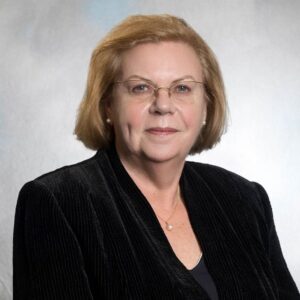
“My hypothesis was that stress, anxiety, and depression can induce infertility through an immunologic mechanism related to the imbalance of pro-inflammatory and anti-inflammatory cytokines,” says Haimovici, noting that the same cytokines—signaling proteins that help control inflammation—are involved in depression, anxiety, and the reproductive tract.
“At the same time, infertility can induce stress, anxiety, and depression. It’s like a circle, and the only way to treat both is to break the circle,” she continues. “So I thought by treating depression and anxiety and lowering stress, we could improve fertility.”
This work motivated Haimovici, who completed medical school in her native Romania before coming to the United States, to do a four-year residency in psychiatry and to return to the Brigham for a fellowship in consultation-liaison psychiatry. During her fellowship, she established the Reproductive Endocrinology and Infertility Psychiatry Clinic in 2000.
The primary goal is to treat and support women with infertility with medication and therapy. Antidepressants, for example, regulate the pro- and anti-inflammatory cytokines at the same time they treat depression and anxiety, she explains.
Haimovici points out that infertility is more common than people might think.
According to a recent survey conducted by the National Survey of Family Growth, 13% of women ages 15 to 49 are infertile and 10.5% of women and their partners receive infertility treatment. About 40,000 in vitro fertilization cycles are performed in the U.S. annually, with nearly 3,000 done at the Brigham alone, according to the Society for Assisted Reproductive Technology Report.

‘She Was There for Me When I Needed it Most’
From Haimovici’s perspective, treatment should entail a full-spectrum approach. She treats her patients at all stages of their infertility path—from a workup and treatment to, hopefully, pregnancy and postpartum.
For instance, one of her patients, who is an artist, was undergoing fertility treatment and experienced several miscarriages. She was anxious and depressed and Haimovici advised her, as part of her psychiatric treatment, to continue painting. She ultimately gave birth to a daughter and later gifted Haimovici with a painting that depicted her infertility journey, including postpartum depression, in various segments of color. That painting now hangs above Haimovici’s bed.
Ferguson also benefited from this full-circle approach. Her first son was born via emergency C-section, after which she was diagnosed with postpartum preeclampsia. Her second son, born at 36 weeks, spent a week in the Brigham’s Richard and Susan Smith Family Foundation Newborn Intensive Care Unit. After both deliveries, Haimovici came to visit Ferguson in the hospital.
“She came to visit me, and she listened to me, and it was such a blessing to have her as part of this whole journey that we were on,” she says. “She was there for me when I needed it most, and I’ll never forget that.”
In fact, Ferguson has continued her care with Haimovici and sees her about every six weeks.
“There’s a lot to be said for setting yourself up with [mental health] support for your fertility journey, even before you get pregnant,” says Ferguson. “Because then it’s there for you in the postpartum world when you’re trying to navigate a lot of other things and dynamics that are unknown to you.”
Haimovici visits her patients after they deliver at the Brigham, not only to evaluate them for immediate postpartum depression but also to educate them and their partners about symptoms of postpartum depression and invite them to contact her if problems arise.
And for one other purpose: “I get to hold the baby.”
Indeed, when asked about the most fulfilling part of her work, Haimovici doesn’t hesitate.
“It’s the babies,” she says. “Every year during holidays, I get cards from my patients with their kids, who I have known since they were conceived. The oldest graduated from college this year.”
Learn more about Carolyn Ferguson’s journey and the work of Florina Haimovici, MD, courtesy of the Dr. Katz application.